Oriental vs Persian Rugs: Key Differences
Oriental and Persian Rugs: What’s the Difference and Which Is Right for Your Home?
If you’ve ever admired a beautifully woven rug and wondered, “Is that Oriental or Persian?”—you’re not alone. Many rug owners use these terms interchangeably, but they’re not the same. Think of it like wine: all Champagne is sparkling wine, but not all sparkling wine is Champagne.
As professional rug experts and appraisers, we can tell you that understanding the difference between Oriental and Persian Rugs not only helps you appreciate their beauty—it also helps you make smarter decisions when buying, caring for, or valuing your rug.
Let’s break it all down in a way that’s simple, practical, and actually useful for your home.
What Are Oriental Rugs?
Oriental rugs are a broad category of handmade rugs woven across Asia. This includes countries like China, India, Turkey, Pakistan, and Afghanistan.
Key point: Every Persian rug is Oriental—but not every Oriental rug is Persian.
These rugs often feature intricate patterns, bold colors, and centuries-old weaving traditions. They’re handcrafted using wool, silk, or a blend of both.
What Are Persian Rugs?
Persian rugs are specifically made in Iran (formerly Persia). They are considered the gold standard in the rug world.
What makes them special?
- Exceptional craftsmanship
- Hand-knotted construction
- Detailed, artistic designs
- High knot density (more knots = more detail)
Owning a Persian rug is like owning a piece of history. Many are passed down through generations.
Key Differences Between Oriental and Persian Rugs
Let’s simplify it:
Origin:
Oriental = Multiple countries
Persian = Only Iran
Design:
Oriental = Geometric or tribal
Persian = Floral, medallion, intricate
Value:
Persian rugs are generally more valuable
Craftsmanship:
Persian rugs often have higher knot density
Think of Persian rugs as the luxury brand within the broader Oriental rug category.
Popular Types of Oriental Rugs and Their Origins
Here are a few examples you might recognize:
Turkish Rugs (Turkey)
- Known for bold colors and geometric designs
- Often use a double knot technique
Afghan Rugs (Afghanistan)
- Deep reds and earthy tones
- Tribal patterns
Indian Rugs (India)
- Fine craftsmanship
- Often inspired by Persian designs
Chinese Rugs (China)
- Minimalist designs
- Soft color palettes
Each region brings its own personality into the rug.
Popular Types of Persian Rugs and Their Origins
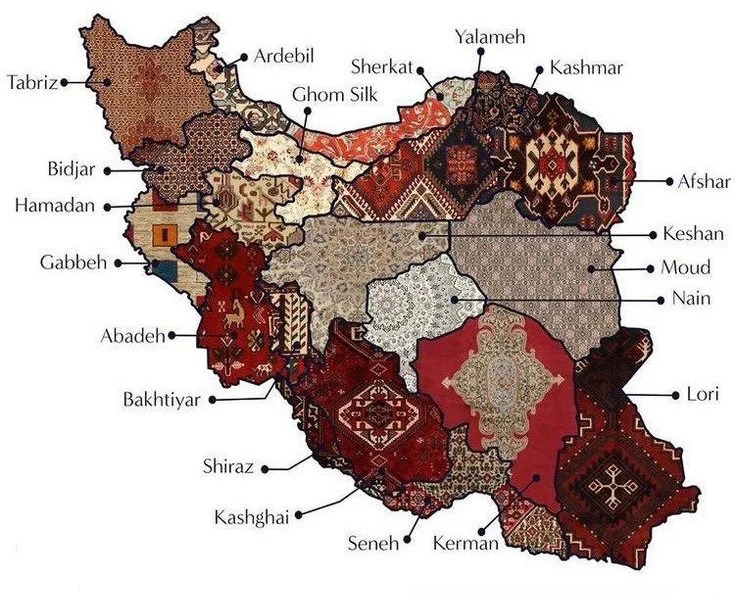
Persian rugs are incredibly diverse. Here are some well-known styles:
Tabriz Rugs (Northwest Iran)
- Highly detailed
- Floral and medallion patterns
Isfahan Rugs (Central Iran)
- Luxurious and artistic
- Often made with silk
Kashan Rugs (Central Iran)
- Classic Persian look
- Rich reds and navy tones
Heriz Rugs (Northwest Iran)
- Bold, geometric designs
- Extremely durable
Each type reflects the culture and artistry of its region.
Does Where a Rug Is Made Affect Its Value?
Absolutely—origin plays a huge role in value.
Why?
- Reputation of craftsmanship
- Materials used (wool vs silk)
- Weaving techniques
- Historical significance
For example, a handmade Persian rug from Isfahan will typically be more valuable than a machine-made rug from another region.
Which Rugs Are Most Valuable and Collectible?
If you’re thinking investment, here’s what matters:
Persian rugs (especially antique)
High knot density rugs
Silk rugs
Signed or rare pieces
Collectors often seek older Persian rugs because their value can increase over time—just like fine art.
Choosing the Right Rug for Your Lifestyle
Let’s be practical. A beautiful rug is great—but it has to work in your home.
Ask yourself:
- Is this a high-traffic area?
- Do I have kids or pets?
- Is this a decorative or functional space?
Your lifestyle matters just as much as the rug’s design.
Best Rugs for Homes with Kids and Pets
If your home is busy (and most are), you’ll want durability.
Best choices:
- Wool rugs (naturally stain-resistant)
- Tribal rugs (patterns hide wear)
- Darker colors
Avoid delicate silk rugs in high-traffic areas—they’re better suited for low-use spaces.
Rug Durability: What to Look For
Durability depends on:
- Material: Wool is king for durability
- Weave: Hand-knotted rugs last longer
- Knot density: Higher density = stronger rug
A well-made Oriental or Persian rug can last decades—even generations.
Why Professional Rug Care Is Essential
Here’s something many rug owners don’t realize:
Your rug is holding more than you see.
- Dust
- Sand
- Pet dander
- Allergens
- Bacteria
Vacuuming only removes surface dirt. Deep within the fibers, contaminants build up over time.
Why Carpet Cleaning Companies Can Damage Rugs
This is critical.
Never use a standard carpet cleaning company for Oriental and Persian rugs.
Why?
- They use harsh chemicals
- They rely on surface cleaning methods
- They don’t understand natural fibers or dyes
- They are probably not certified in Oriental and Persian rug cleaning
- It is impossible to thoroughly wash an Oriental or Persian rug in the home
This can lead to:
- Color bleeding
- Fiber damage
- Shrinkage
- Permanent loss of value
- Dry rot
It’s like taking a luxury watch to a general mechanic—it’s just not the right fit.
The Proper Way to Clean Oriental and Persian Rugs
Professional rug cleaning is a multi-step process, not a quick job.
It includes:
- Dusting to remove embedded grit
- Testing to ensure that rug dyes are stable
- Gentle washing with industry approved cleaning solution for the rugs specific material and dye types
- Controlled drying
- Fiber grooming
This process protects both the beauty and structure of your rug.
Why Choose Oriental Rug Salon
When it comes to caring for your rug, expertise matters.
Oriental Rug Salon is Southwest Florida’s leading expert in:
- Oriental and Persian rug cleaning
- Rug appraisals
- Repair and restoration
Here’s what sets us apart:
- WoolSafe Approved Service Provider
- Certified Partner with the Carpet & Rug Institute (CRI)
- Specialized, multi-step cleaning process
- Deep understanding of natural fibers and dyes
- Supervised by a Rug Master and Appraiser
For expert care you can trust:
Website: https://orientalrugsalon.com/
Facebook: https://www.facebook.com/OrientalRugSalon/
Phone: 239-424-8171
Your rug isn’t just décor—it’s an investment. Treat it that way.
Hand Knotted Oriental and Persian Area Rugs – Stories Worth Preserving
Hand-knotted Oriental and Persian rugs are far more than decorative pieces—they are works of art that tell a story through every carefully tied knot. Each rug reflects the culture, traditions, and history of the region where it was created, with patterns and colors often symbolizing everything from family heritage to local landscapes.
Unlike machine-made rugs, these masterpieces are woven entirely by hand, and depending on their size, intricacy, and knot density, they can take anywhere from several months to multiple years to complete. This extraordinary level of craftsmanship makes them not only beautiful but also highly valuable and meaningful. Because of the time, skill, and tradition woven into every fiber, these rugs deserve proper care and preservation so they can be enjoyed for generations to come.
Understanding the difference between Oriental and Persian Rugs helps you make better choices—whether you’re buying, placing, or maintaining one in your home.
Persian rugs often carry higher value and prestige, while Oriental rugs offer a wide variety of styles and price points. The right choice depends on your lifestyle, your space, and how you plan to use the rug.
And remember: proper care is everything. With the right professional cleaning and maintenance, your rug can remain beautiful for generations.
FAQs
-
What is the main difference between Oriental and Persian rugs?
Persian rugs are made only in Iran, while Oriental rugs are made across many Asian countries.
-
Are Persian rugs more valuable than Oriental rugs?
Generally, yes. Persian rugs often have higher craftsmanship and collectability.
-
Can I clean my Oriental or Persian rug at home?
Basic vacuuming is fine, but deep cleaning should always be done professionally. To understand, please click on this link to a video explaining why you should never have your area rug cleaned in your home.
-
How often should rugs be professionally cleaned?
Typically every 2–3 years, depending on use, pets, and traffic. Click on this link to view a video on Oriental and Persian rug cleaning.
-
What’s the proper way to vacuum an Oriental or Persian area rug?
Please click on this link to view our video on the proper way to vacuum a wool or silk area rug.