Understanding Silk Area Rugs
Silk Rug Value Differences Explained: Qom vs Tabriz vs Kashmir vs Chinese Silk
Understanding What Determines the Value of a Silk Rug
Silk rugs are among the most beautiful and sought-after handmade textiles in the world. Their fine detail, luminous sheen, and intricate craftsmanship make them both decorative art and functional floor coverings. However, not all silk rugs carry the same value. Customers often ask why two silk rugs that look similar can vary significantly in price.
The answer lies in origin, materials, craftsmanship, knot density, and artistic tradition. In this guide, the Rug Master at Oriental Rug Salon explains the value differences between four of the most common silk rug types: Qom, Tabriz, Kashmir, and Chinese silk rugs, helping you understand what makes each unique.
At Oriental Rug Salon, we specialize in the cleaning, repair, and appraisal of fine Oriental and Persian rugs, helping clients throughout Southwest Florida properly care for and understand their investment pieces.
Why Silk Rugs Are Valuable
- Silk is a premium fiber used in rug weaving because of its:
- Natural sheen and light reflection
- Ability to hold extremely fine detail
- Soft, luxurious texture
- Strength despite its delicate appearance
Producing a silk rug requires skilled artisans and significantly more time than wool rugs. The finer the silk and the higher the knot density, the more detailed and valuable the rug typically becomes.
Tip: How to identify real silk rugs versus “Faux silk” Viscose, Banana Silk, and Rayon
Qom (Qum) Silk Rugs – The Benchmark for Fine Silk
Origin: Qom, Iran
Typical Construction: Silk pile on silk foundation
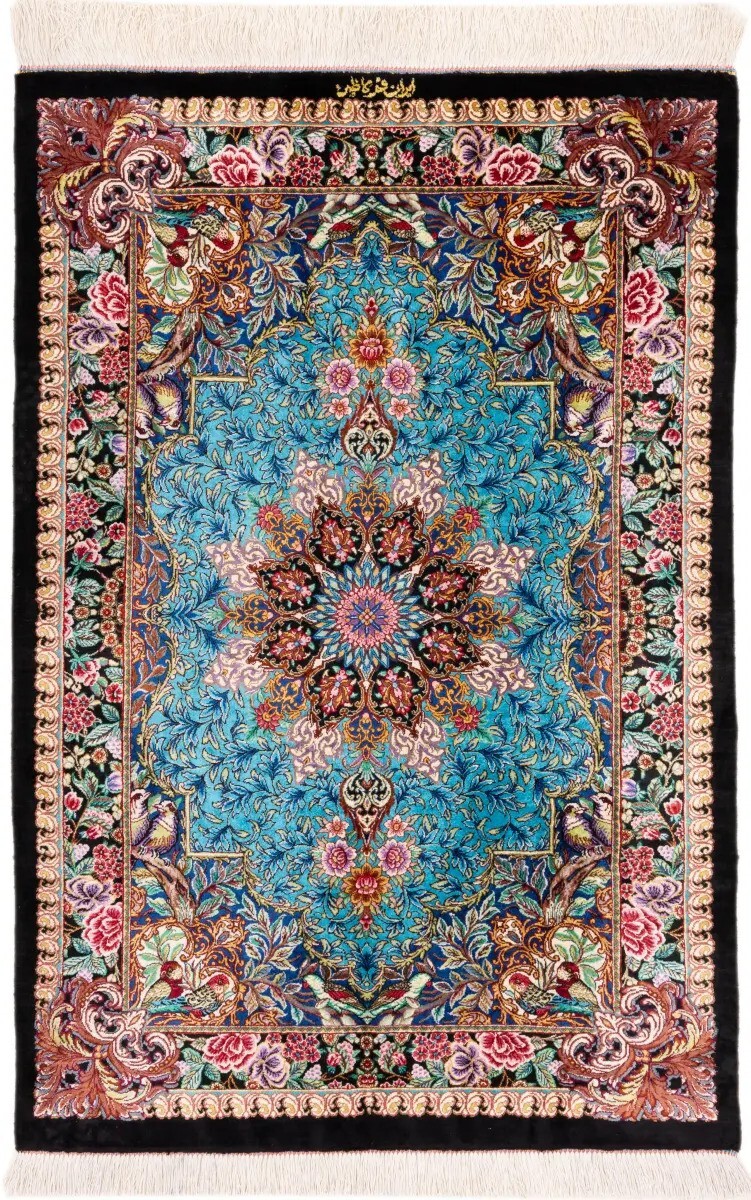
Qom silk rugs are widely considered the gold standard of modern silk rug weaving. The city of Qom became famous for silk rugs in the 20th century and quickly developed a reputation for exceptional quality and precision.
Why Qom rugs are valuable:
- Extremely fine knot density
- High-quality silk materials
- Detailed floral and medallion designs
- Often signed by the workshop or master weaver
Because of their craftsmanship and material quality, Qom silk rugs typically command the highest prices among modern silk rugs. Many are purchased as decorative or collectible pieces rather than everyday floor coverings.
Tabriz Silk Rugs – Artistic Tradition and Versatility
Origin: Tabriz, Iran
Typical Construction: Wool foundation with silk highlights or full silk
Tabriz is one of the oldest rug weaving centers in the world. While many Tabriz rugs are wool, some are produced entirely in silk or with silk highlights.
Why Tabriz rugs are valued:
- Strong artistic heritage
- Wide variety of designs, including pictorial and floral patterns
- Durable construction compared to silk-on-silk rugs
- Recognized workshop names and master weavers
Full silk Tabriz rugs can be very valuable, especially older examples, but many Tabriz pieces are valued for their artistic design rather than extreme knot density alone.
Kashmir Silk Rugs – Fine Detail with Decorative Appeal
Origin: Kashmir region (India)
Typical Construction: Silk pile on cotton foundation
Kashmir silk rugs are known for their softness and fine detail. They often feature Persian-inspired designs and vibrant color palettes.
Why Kashmir rugs are popular:
- Fine weaving and detailed patterns
- Softer color tones and elegant appearance
- More accessible pricing compared to Persian silk rugs
While beautiful, Kashmir silk rugs generally have lower market values than Persian silk rugs due to differences in silk quality, weaving tradition, and global collector demand.
Chinese Silk Rugs – Elegant but Mass-Produced
Origin: China
Typical Construction: Silk pile on silk or cotton foundation
Chinese silk rugs gained popularity in the late 20th century due to their soft texture and attractive pricing.
Characteristics of Chinese silk rugs:
- Smooth, glossy appearance
- Simplified floral or Art Deco designs
- Often produced in larger quantities
- Lower knot density compared to Persian silk rugs
Although visually appealing, Chinese silk rugs typically carry lower resale and collector value because of production volume and differences in weaving tradition.
Key Factors That Affect Silk Rug Value
Regardless of origin, several factors influence a silk rug’s value:
- Knot Density
Higher knot counts allow for finer detail and increase value.
- Silk Quality
Natural, high-grade silk produces better sheen and longevity.
- Design Complexity
Intricate patterns require more time and skill to produce.
- Age and Condition
Well-maintained rugs retain value longer.
- Provenance and Signature
Signed workshop pieces may increase desirability.
Why Professional Cleaning and Care Matters for Silk Rugs
Silk rugs require specialized cleaning methods. Improper cleaning can damage fibers, cause dye migration, or reduce the rug’s value.
At Oriental Rug Salon, we provide:
- Professional Oriental and Persian rug cleaning
- Expert rug repair and restoration
- Certified rug appraisal services
- Safe, fiber-specific washing methods
Our team works with collectors, interior designers, and homeowners throughout Southwest Florida to preserve the beauty and longevity of fine silk rugs.
Serving Southwest Florida’s Oriental and Persian Rug Owners
Whether your silk rug comes from Qom, Tabriz, Kashmir, or China, proper care ensures it remains beautiful for generations. Understanding the differences in silk rug construction helps owners make informed decisions about cleaning, maintenance, and value.
If you would like your silk or wool rug professionally cleaned, repaired, or appraised, contact:
Oriental Rug Salon
🌐 https://orientalrugsalon.com/
We are a full-service Oriental and Persian rug cleaning, repair, and appraisal company proudly serving clients throughout Southwest Florida.