Prevent SWFL Humidity & Mold from Destroying Area Rugs
The Invisible Threat: How SW Florida’s Summer Humidity Destroys Oriental Rugs (And How to Stop It)
Southwest Florida is famous for its gorgeous winters, stunning Gulf views, and a summer season defined by unrelenting heat and tropical moisture. While homeowners take strict precautions to protect their roofs, air conditioning units, and landscaping from the elements, an invisible threat quietly targets their interior valuables.
If you own handmade Persian, Turkish, or Oriental area rugs, the combination of extreme regional humidity and standard home cooling habits creates a literal breeding ground for structural damage. Organic textiles like wool and silk possess an incredible capacity to absorb airborne moisture, making them highly susceptible to mold, mildew, and irreversible dry rot during the humid summer months.
For premium textile restoration, contact the leading experts at Oriental Rug Salon at 239-424-8171 to schedule a quality, deep-cleaning Oriental or Persian area rug cleaning service.
Preventative awareness is essential to protecting your interior investments. The physical relationship between the local climate and your luxury textiles requires specialized care to shield family heirlooms and cherished area rugs from moisture damage.
The Science of Moisture: Why Wool and Silk are Hygroscopic Magnets
To understand why summer is so dangerous for luxury textiles made of wool or silk, it helps to understand the physical traits of organic fibers. Wool and silk are highly hygroscopic materials. This means they actively absorb and retain moisture vapor directly from the surrounding air.
Under normal environmental conditions, a wool fiber can hold up to 30% of its own weight in moisture without feeling wet to the touch. This natural absorption is an excellent asset in drier climates, helping to stabilize room humidity and repel static electricity. However, in regions experiencing persistent, extreme outdoor humidity, this benefit turns into a major vulnerability.
When local relative humidity levels routinely climb past 80% or 90%, the air inside your home changes too. Even with a modern HVAC system running, any micro-fluctuation in temperature can cause your textiles to drink in ambient water vapor.
Once moisture settles into the dense, compressed foundation yarns of a hand-knotted piece, it becomes trapped against non-porous subfloors like concrete, porcelain tile, or sealed hardwood. Without consistent structural airflow, that hidden dampness sets off a destructive countdown for organic fibers.
The Air Conditioning Illusion: The Hidden Trap for Seasonal Homeowners
A very common misconception among local residents is that leaving the air conditioning running at a constant 76°F or 78°F provides total protection against interior mold and mildew. While your HVAC system serves as a primary dehumidifier, standard cooling cycles are often insufficient to fully dry dense, multi-layered textiles laid flat on the floor.
This issue intensifies significantly for “snowbirds”—seasonal residents who head north for the summer and leave their properties unoccupied for months with maybe an occasional visit by a home watch service. To save on utility bills, many homeowners turn their thermostats up to 80°F or set their systems to run only intermittently on a timer.
When an AC unit runs infrequently, it fails to lower the indoor relative humidity below the critical 60% threshold. When indoor humidity hovers between 65% and 80%, mold spores—which exist naturally in the air everywhere—land on the nutrient-rich wool fibers, anchor into the damp foundation, and begin multiplying rapidly.
Because these rooms are dark, tightly sealed, and completely undisturbed, a localized fungal outbreak can spread entirely unnoticed across a multi-thousand-dollar floor covering in a matter of weeks.
Mildew vs. Dry Rot: Understanding the Structural Damage
When moisture remains trapped inside an authentic Persian or Oriental piece, the damage progresses through two distinct, devastating phases:
Phase 1: Mildew and Sour Odors
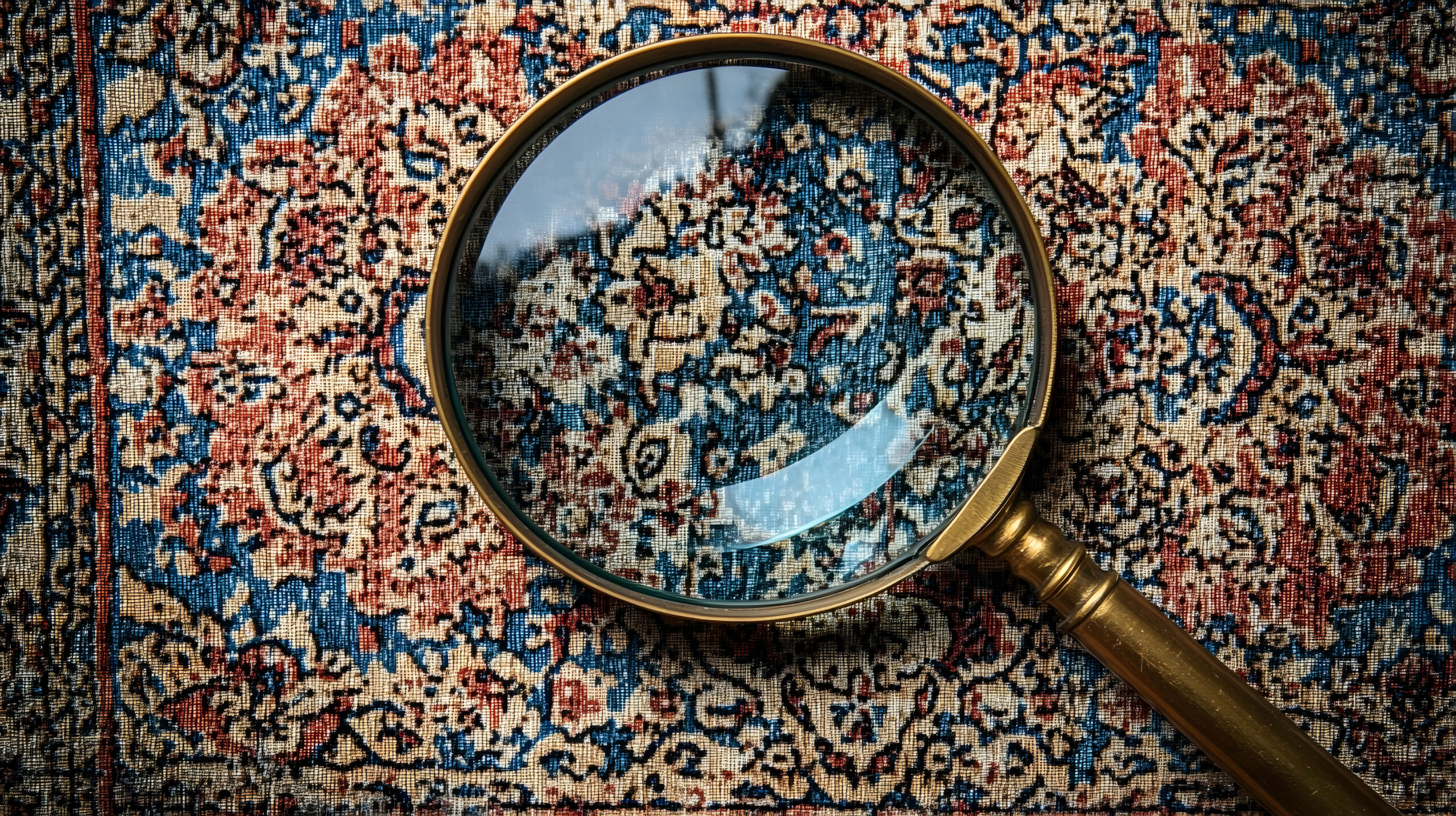
The earliest indicator of moisture retention is a musty, sour, or old-book odor emanating from the room. This scent is caused by microbial volatile organic compounds released by active mildew colonies. At this stage, the fungus is primarily feeding on surface soils, dust particles, and the organic starches embedded within the pile. Mildew is highly problematic for indoor air quality and can stain fiber tips, but if caught early, it can generally be eradicated through specialized sanitization and full-immersion washing. It is also noted that mold and mildew spores can remain embedded and not easily seen by the naked eye.
Phase 2: Microscopic Dry Rot (Dry Rot)
If the moisture issue is left unaddressed, the situation advances to dry rot—the single most destructive event that can happen to a hand-knotted textile. Despite its misleading name, dry rot requires a wet environment to begin.
When the cotton warp and weft foundation yarns remain damp for extended periods, specific wood-decaying fungi take root. These microorganisms consume the cellulose structure of the cotton strands, permanently destroying their tensile strength.
Once the fungus finishes feeding and the area eventually dries out, the affected fibers become extremely brittle and turn to dust under minimal pressure. A piece suffering from advanced dry rot will literally crack, tear, or split apart like old cardboard when rolled or lifted, rendering the piece structurally compromised and requiring highly expensive, intensive restoration work.
4 Warning Signs of Humidity and Mold Damage Homeowners Can Track
Because fungal growth almost always starts at the lowest point of the textile—where the backing meets the subfloor—surface inspections can be highly deceptive. Homeowners should perform a thorough physical assessment of their items at least once every few weeks during the summer by checking for these four indicators:
The Touch Test: Firmly press your bare palm into the center pile of the piece for 10 to 15 seconds. If the fibers feel abnormally cool, clammy, or slightly sticky, the textile is actively holding excess ambient moisture from the air.
The Foundation Flip: Gently lift one of the corners and look directly at the back of the piece. Look closely for powdery white residues, dark gray spots, or fine, web-like gray structures threading through the structural knots.
The Flexibility Check: Gently fold a small section of the border inward. Listen closely for any faint crunching, cracking, or popping sounds. Authentic, healthy wool should be perfectly silent and highly pliable; any auditory resistance indicates fiber degradation or early dry rot.
The Persistent Odor: Sniff the center of the room after the home has been sealed up for a day. If you notice a heavy, earthy, or musty aroma that returns shortly after vacuuming, a localized colony is likely growing beneath the surface.
Why Automated Carpet Cleaning and DIY Steam Extraction Fail
When a rug owner discovers a musty smell or suspects mold growth, their first instinct is often to look up a generic carpet cleaning company or rent a DIY hot-water extraction machine from a local home improvement store. Using hot-water extraction or standard steam cleaning on a hand-knotted wool or silk area rug is a catastrophic mistake that will rapidly accelerate fiber destruction.
In-home carpet cleaning machines are built strictly for synthetic, wall-to-wall carpeting stretched over porous wood framing. These machines inject scorching water deep into the pile under high pressure and rely on weak surface vacuums to pull it back out. (Watch our video here explaining this process)
When applied to a dense, heavy handmade Persian or Oriental piece, these machines leave behind gallons of trapped water deep within the cotton foundation. Because the piece cannot be lifted from underneath to dry, this DIY approach provides the very fuel latent fungal spores need to expand, turning a minor humidity issue into an immediate structural emergency.
Furthermore, retail spot-cleaning chemicals and over-the-counter antimicrobials utilize harsh, high-pH surfactants. These chemicals strip away the natural lanolin oils that coat and protect wool fibers, leaving them brittle, highly faded, and vulnerable to severe dye bleeding.
The Museum-Quality Solution: The Oriental Rug Salon Restoration Process
Eliminating deep-seated fungal spores, reversing musty odors, and halting dry rot requires an environment where variables can be fully controlled. Oriental Rug Salon provides a comprehensive, multi-step, full-immersion hand-washing process designed exclusively for delicate textiles within an advanced, climate-controlled facility.
-
Advanced Dry Soil and Spore Mechanical Dusting
Before a single drop of water touches the textile, the piece undergoes an exhaustive dry-dusting process using compressed air and specialized mechanical harmonic vibrations. This stage forces out pounds of deeply embedded abrasive sands, dry allergens, and millions of unactivated fungal spores trapped deep within the structural knots. Removing these dry contaminants while they are completely dry prevents them from turning into a thick, muddy sludge during the washing phase.
-
Comprehensive Dye Stabilization and Colorfastness Testing
Every hand-knotted heirloom features unique, organic vegetable or mineral dyes that react uniquely to liquid exposure. Our certified technicians test every color field for structural stability before cleaning begins. If any sign of dye migration or color bleeding is observed, specialized chemical stabilizers are applied to lock the motifs firmly in place throughout the deep-cleaning process.
-
Full-Immersion, Sub-Surface Hand-Washing and Sanitization
The piece is placed into our specialized wash plant, where it is fully submerged in a continuous bath of chilled, pH-balanced water and gentle, WoolSafe-approved shampoos. This complete submersion allows cleaning solutions to gently saturate the absolute core of the textile, dissolving trapped perspiration, embedded pet residues, soils, and active mildew colonies without subjecting delicate fibers to aggressive mechanical scrubbing.
-
High-Volume pH controlled Rinsing
Once the organic shampoo has fully encapsulated the soil and microbial elements, pH controlled cold water with conditioning agents continuously flushes the area rug ensuring all contaminates are eliminated from the textile. This deep rinse cycle guarantees that no chemical residues, dirt, or biological particles are left behind within the foundational warp and weft threads.
-
Centrifuge Extraction and Controlled Rapid-Drying Room
To prevent the exact moisture-trapping issues that occur at home, the rinsed textile passes through calibrated, non-destructive, centrifuge to safely extract over 95% of the retained wash water.
The piece is then immediately transferred to our specialized, state-of-the-art climate-controlled drying atmosphere. Suspended under precise tension, the item is dried rapidly using high-volume air movers and heavy-duty commercial dehumidifiers that maintain absolute moisture control. This rapid extraction prevents any chance of subsequent mildew formation or fiber shrinkage.
Proactive Home Care: Protecting Your Textiles Between Professional Washes
While periodic professional deep cleaning is essential to maintaining the structural integrity of your heirlooms, implementing these five proactive habits at home will significantly reduce your risk of environmental damage during the peak summer months:
Maintain Low Indoor Humidity: Use a standalone hygrometer (can be purchased for less that $10 from Amazon or Walmart) to monitor your indoor environment daily. Ensure your household relative humidity remains strictly between 45% and 50%. If your central air conditioner cannot maintain this level, consider adding a standalone commercial dehumidifier to rooms featuring high-value investments.
Upgrade to Breathable Rug Pads: Never place a luxury textile directly over bare subfloors, and strictly avoid cheap, solid rubber or plastic padding options that trap moisture against the backing. Always use a high-quality, breathable, felt-and-rubber pad designed specifically to facilitate uniform sub-surface airflow.
Elevate and Protect Potted Plants: Never place indoor potted plants directly on top of an Oriental area rug, even if using a plastic saucer. Condensation naturally forms beneath plant containers, creating localized damp spots that can cause severe, irreversible dry rot before you ever realize a leak has occurred.
Implement Periodic Rotations: Rotate your large floor coverings 180 degrees at least twice a year. This practice ensures even exposure to ambient light and foot traffic, while disrupting stagnant air pockets that frequently develop beneath heavy furniture legs and along baseboards.
Vacuum via Suction Only: Clean your textiles weekly with a high-quality vacuum cleaner, but turn off the aggressive spinning beater bar or rotating brush attachments. Use suction-only cleaning paths to remove surface dust and spores without pulling or tearing at the delicate fringe or wool face fibers.
Trust Southwest Florida’s Certified Textile Restoration Professionals
Your hand-knotted Persian and Oriental rugs are far more than standard floor coverings—they are intricate works of historical art, prized design anchors, and cherished family investments that deserve specialized care. Do not allow the invisible threat of summer humidity, mold growth, or hidden dry rot to compromise their beauty or deplete their long-term financial value.
The team at Oriental Rug Salon is widely recognized as the premier certified specialist for Oriental rug cleaning in Fort Myers, FL, and throughout SW Florida, delivering meticulous, museum-quality hand-washing and structural preservation for clients across Lee, Collier, Babcock Ranch, and Charlotte counties.
As an approved WoolSafe Service Provider certified by the Institute of Inspection, Cleaning and Restoration Certification (IICRC) and the Carpet & Rug Institute, our facility provides the specialized, expert care your delicate textiles require.
Whether you need a proactive seasonal check, a deep sanitization treatment to resolve a persistent musty odor, or specialized hand-washed Persian rug care to address early structural wear, our experienced artisans are here to help.
We proudly offer convenient, free pickup and delivery rug wash services throughout SW Florida, including Naples, Bonita Springs, Sanibel, Captiva, Fort Myers, Punta Gorda, and Cape Coral, making it easier than ever to protect your valuable textiles.
Get a Free Evaluation Today
Protect your fine textiles from the harsh Florida climate. Contact Oriental Rug Salon today at 239-424-8171 to speak with a certified rug care specialist, request a transparent, upfront service estimate, or schedule your complimentary home pickup. You can also visit our state-of-the-art facility online at OrientalRugSalon.com to learn more about our specialized hand-washing, odor removal, and master repair services.